Monday, 4 March 2013

Affordable Photography

I am often asked for advice on photography purchases by friends who want a good 'point and shoot camera' that can handle most situations reasonably well, but costs less than £300.  I must admit that my first instinct is to say that it isn't the camera, it's the photographer, but this is unfair.  Yes it is true that a pro photographer can work miracles with a cheap camera but the truth of the matter is that most people aren't professionals.

Technological advances mean that most cameras released in the last few years should be easily capable of dealing with the demands of the enthusiastic amateur.  Unfortunately the price of most cameras has gradually crept up.  A high quality entry level compact or bridge camera can easily cost upwards of £500 - that's in the same region as a decent second-hand DSLR!  Not everyone wants to invest in a camera that has separate lenses, nor be lumbered with bags of kit just to take a photo of their children as they play in the park.  This blogpost is for those guys and gals!

Entry level cameras are all about a compromise.  When stripped down to its basic components a digital camera is a combination of lens, processor and sensor.  The next level of camera is a 'bridge' camera, one that spans the gap between the amateur and the professional.  These cameras are more expensive as the quality of the components is often much better.  I'll briefly talk about lenses and sensors before I give my recommendations.

Lenses

Professional cameras split the lens away from the camera body so that the user can pick versions that best work for their style of photography i.e. landscape, portrait, sport.  For entry level cameras this is not an option as the lens is usually fixed in place and so it is important to pick a model that can cover the 'range' you will need it for.  Don't be tricked into thinking that a camera with a 150x zoom is the best for you (unless you need to take pictures of things that are in very bright light and are very far away).  Another hurdle to overcome is that the numbers that manufacturers quote for their lenses do not take into account the size of the sensor.  A smaller sensor will actually give a lens a 'free' zoom effect but the amount you can fit into the picture will be less.  For example the small sensor on my Lumix GX1 has a crop factor of 2x.  If I put a 'wide angle' 20mm lens on the camera then I'm actually putting the equivalent of a traditional 40mm lens on the camera.  Instead of being able to take really wide picture of landscapes I've actually got a great portrait lens.  If it seems complicated then don't let it stress you out.

Sensor

In my opinion the sensor is the most important part of the camera.  The bigger the sensor the more sensitive to light the camera will be.  Light sensitivity is a good thing.  If your camera can work in low light then you can select a fast shutter speed or increase the depth of field (how much of the image is in focus).  This makes it much easier to get pictures of your kids running around an still have them be in focus.  The picture below shows why a smaller, cheaper camera will often produce rubbish results - look at the different in sensor size!

Typical sensor sizes.  Image copyright Simply Better Photos
When picking a camera don't be blinded by the 'megapixel' number of the camera.  A higher number does not mean a better camera.  If your camera can take pictures at 8 megapixels or more you should be able to take images that will print very well at 20x30 inches (50x75cm).  The reason that pro's use higher megapixel counts is to allow space in the image to cut off edges etc. and still have a picture that can be printed.  If you are interested in editing your photos then a higher pixel count can be useful as it gives more 'dots' to play with.

Shooting in RAW mode

One final feature to be aware of is RAW mode.  This is a feature that is found in all pro and many 'bridge' cameras.  If you like to edit your photos then RAW is a very powerful feature.  In RAW the camera will be able to store a lot more information about the scene you are shooting and this can be used for more creative control later.  If you are a novice photographer then this feature may not be that important to you and so I've chosen cameras that all produce good JPEG images i.e. the camera makes the decision how to produce the image.  If you want to see a more in depth article about RAW vs. JPEG look HERE.


Finally, the Cameras!

I've gone for slightly older cameras, the prices have dropped on these models and you are getting a camera that cost around £500-1000 only 2-3 years ago for under £300.  Don't let any dials/buttons in the pictures put you off, you will hopefully use these advanced features as your knowledge of the camera grows.  All of the cameras selected have a full auto mode and many have settings for different scenes such as indoor portrait, fireworks, snow, sports.


Canon G12 Bridge Camera


The Canon G12 is an all in one 'bridge' camera that is really good in point and shoot mode.  As you get better you can change to more advanced settings.  A second hand model is at the top end of the £300 budget and this much loved camera has held its value well.  The lens is built in and has an equivalent range of a 28-140mm zoom.  This range is great for everything except distant shooting.  The camera can shoot in RAW mode, has a near HD quality video and take take a separate flash unit if you find the built in one too weedy.  This camera was launched in 2010 but the latest version of this model is the G15 so if you see that at a bargain price then snap it up!

Really geeky review and technical stats and details HERE.
Buy it on Amazon, or have a look at the latest eBay listings to see if you can spot a bargain.

Copyright Lisa Ng

Copyright Rafael Gandi

Fujifilm X10 Bridge Camera


It's possible to pick up one of these cameras second-hand for under £240.  It looks very similar to the G12 and also has a built in lens.  The focal range is slightly less at 28-122mm.  The key selling point for this camera is that it has a 2/3 sized sensor, much larger than most cameras of this size, and so its performance in tricky low light settings is much better than would be expected.  The camera was launched in 2011.  Sample images below:

Geeky review HERE
Check out prices on Amazon (or scour eBay for a great deal)

Copyright Fujifilm

Copyright Fujifilm


Canon Powershot S95 Point and Shoot


As you can see from the images above this is a relatively simple camera but don't let that put you off.  The camera is really small and light and yet it contains the highly capable Canon DIGIC 4 processor and has a lens that has a range of 28-105mm.  In such a small camera something has to give and in this case its an optical view finder i.e. you cant put the camera up to your eye to frame your image and so have to rely on the video display in the back of the camera.  The video mode isn't brilliant but is passable.  Launched in 2010 this camera had a retail price of £399 but you can pick up a 'used like new' model on Amazon for under £170!  I found this shot on Flickr that was taken by someone using the S95 - despite the low light he has been able to get the shutter speed fast enough to freeze the confetti!  I couldn't find any baby portraits taken with the S95 but the bottom shot of a dog gives a pretty good idea of the image quality that can be achieved.
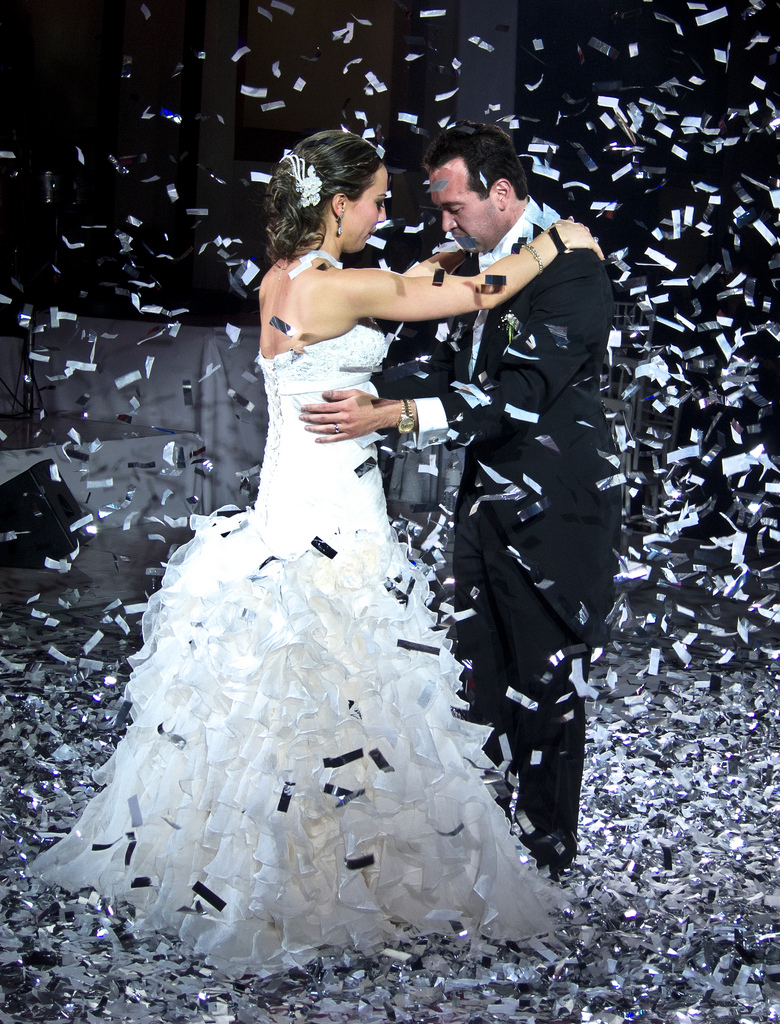
Copyright Diego Bribiesca

Copyright J Montcrieff

Canon 500D or Nikon D5000 DSLR

So far I've only looked at entry and bridge cameras but even with a tight budget of £300 it is possible to get a very good quality entry level DSLR.  I mentioned at the beginning of the post that casual users often shy away from these types of camera.  I believe that the common misconception is that these are too complicated or expensive.  The Canon 500D and Nikon D5000 cameras were both released in June 2009 and were amongst the first cameras to make owning a DSLR affordable.  With the kit lenses supplied the original prices were £969 and £799 respectively.  I found both of these cameras available 'as new' on Amazon for under £300 - amazing bargains for technology that is only a few years old. Both cameras were well received by the critics and have only recently been surpassed by better versions.  


Both cameras negate the problem of small sensor sizes as they use the equivalents of the large APS-C sensor.  They work well in low light, have a multitude of automatic and assisted settings.  Best of all these cameras can grow with the user.  Because the lenses are not fixed to the camera it is possible to buy additional ones to suit your specific needs.  The very high end professional lenses can cost thousands of pounds, more so than the best camera bodies, but entry level ones make great birthday or Christmas presents :)  Even today these are hugely popular cameras.  A quick look on Flickr revealed 525,000 images for the 500d and 623,000 images for the D5000.

A review of the Canon 500D is HERE.
Review for the Nikon D5000 is HERE.


Three 'Must Have' Accessories

I know that a lot of new photographers get into photography after they have children.  Recording their babies as they develop starts as a pastime but can see the amateur turn into a semi or full blown professional as their children grow.  Regardless of the camera chosen most novices can get frustrated at the poor results they are getting and will often blame the camera and look for a 'better' one.  

To get more professional results you need to have better control over the light hitting your subject and for this you need to stop using the built in flash on the camera and buy a separate flash unit.  Better still you need to make the light you use very soft to get rid of harsh shadows and so should mount the flash in a softbox.  The final touch is to be able to move the flash unit where you want to and not have it stuck on the top of your camera.  For this you need a remote trigger that communicates between the camera and flash.  

These three items are fundamental bits of kit an any pro's arsenal and top of the range versions exist (for example the 580EX II flash unit I use cost over £300 when I bought it).  Searches on Amazon have come up trumps though and perfectly good entry level components do exist for the casual user:

The Yongnuo YN-560 II flash unit looks and acts so much like the Canon 580EX that I'm surprised that a law suit hasn't been issued.  It can be picked up for around £50.

The Pixel Pro Digital trigger allows you to fire the camera remotely or fire the flash whilst it is separate to the camera - and it's under £30

A Cowboy Studio Softbox that has been designed to work with off-camera flash units can be found for under £30.


As you can see below the addition of these simple, and relatively inexpensive, items means you get a soft light and great catch lights in the subjects eyes.  A snotty nose is obviously an optional extra :)  Thanks to Susie for posing and Fiona for letting me publish this image.

Copyright Me!  Paul Fox

Thursday, 28 February 2013

Third Floor Gallery: Hin Chau, Justin Maxon and Erin Trieb

View out of one of the gallery windows onto Bute Street

Now that I am settled in after our recent move to Wales I've been taking some time to explore Cardiff and the photo galleries there.  One of my favourite galleries is the Third Floor Gallery located on Bute Street.  I intend to visit this gallery often and, whilst it may be too far for you to visit, I hope that you can learn about the photographers exhibiting there through this blog.

The Third Floor Gallery is actually located over two floors with the recently opened lower floor cunningly named the Second Floor Gallery.  It was set up by photographers Joni Karanka, Maceij Dakowicz, and Bartosz Nowicki.  It runs only through the generosity of donations and it's staff are all volunteers.  The main exhibitions run for about six weeks on the third floor and older ones are 'demoted' to the second floor to extend their exhibition time by a further six weeks.  Entry is free but donations and sponsorship are always welcome.


Hin Chau

The main exhibition during this visit was by the photographer Hin Chau.  The inspiration for his work was a chance encounter in a rubbish strewn field:

“Several years ago, I found myself standing before a field littered with a kaleidoscopic multitude of plastic bags. A middle-aged couple was passing by; 'Isn't this absolutely ghastly?' they announced with considerable consternation. I paused before making a remark that surprised both them and myself: it was one of the most wonderful things I'd seen in a while.” - Hin Chua


This led to his series After the Fall.  The images in this series were taken at the edge of developed areas and attempt to show where the grey area between urban and rural/industrial lies.  Rather than just wandering around his locations Chau uses satellite imagery to scout a potential location before making a trip to the area.  Creating the series has proved a great excuse to travel and so far Chau has visited fifteen countries and hundreds of towns and cities.


For me this series blurred the lines between artistic and documentary photography.  The abstract nature of many of the images in the series was appealing when seen as a collection but I only actually liked about six of the images.  The images were displayed in smaller sets of photographs, as can be seen below, and I liked the way that lines and curves ran through each of the sets.  In each of the sets there always seemed to be an image that just didn't quite fit and I wonder if this was a deliberate artistic tool used to jar the viewer's eye?


I thought that the print quality of the images and the 'pinned to the wall' method of display distracted from the exhibition, but again this may have been the photographer's requested layout/method.  Chau has also exhibited in Paris and the display method was different there, much darker and closer to the feel of the imagery as can be seen below:


Due to space constraints only a small portion of the series has been put on display so I would encourage you to explore Chau's work in more depth by looking at his website.


Winter in America: Justin Maxon and Erin Trieb

No expense spared!

Having finished looking at the main exhibition I moved down to the 2nd Floor Gallery to check out the work by Justin Maxon and Erin Trieb.  These photographers had their work displayed together in an exhibition called Winter in America.

‘Save your souls, it’s winter in America’ cried Gil Scott Heron in 1974, against a backdrop of economic decline, social fragmentation, racial tension and a lingering war in Vietnam. 

Fast forward to contemporary America where the economy is struggling, racism blights many communities and the war in Afghanistan adds a daily toll of misery. ...This is the harsh backdrop to the work of Justin Maxon and Erin Trieb, 2010 and 2011 winners of the prestigious FotoVisura grant. 


Justin Maxon

Maxon's images in this exhibition were taken from his series When the Spirit Moves.  Maxon chose to investigate life in Chester, Pennsylvania and area where violence is commonplace (there are over 300 unsolved murders since the 1990's) and inhabitants have to endure poverty and unemployment.  

spirit-42

Many of the images in this series have been created by using multiple exposures in the camera - a successful attempt by Maxon to show the layers of complexity to the poor social situation of his subjects.  The images work much better when seen in the gallery rather than the crude recreations displayed in this blog.

jmaxon_003_3334

Each of the images is accompanied by a short piece of descriptive text that helps to explain what the viewer is seeing - this is particularly useful in the case of the multiple exposures where it is not always clear what has been captured.  Even in the single exposure shots the text adds depth and understanding.  In the image below, for example, we learn that the subject was shot in the neck in 2008 whilst driving away from a party.  The bullet was meant for his friend.  As a result of his injuries he was left paralysed.  Maxon has captured him sitting and waiting, with an electric toothbrush in his mouth, for his carer to return to finish brushing his teeth.

chester-011

The high contrast, grainy, black and white images reminded me of a series taken by the street photographer Boogie working in New York.  Both are visions of a darker side to society that is often overlooked by the mainstream.  I would like to think that showing this underbelly will bring aid and assistance to communities portrayed but I doubt that anything ever gets done, or can be done in the short term, to help.

spirit-39

More of Maxon's work can be found on his website.


Erin Trieb

The second half of the Winter in America exhibition was by Erin Trieb.  Where Maxon chose to follow a community to create his images of a broken America, Trieb focused on one individual, 22 year old soldier Adam Ramsey.  Ramsey served in Afghanistan and was diagnosed with Post Traumatic Stress Disorder on his return from duty.  The images were originally taken as part of Trieb's The War at Home series which document Ramsey's battle with depression and subsequent rehabilitation.

This was my favourite part of the exhibition.  Classical documentary photography at its best.  Trieb had previously worked with veterans and this gave her a stronger insight into the suffering of troops after the fighting had stopped.


As with the Maxon's images texts had been provided to explain each of the images.  This really added to the story and the difficulties that Ramsey, and many veterans like him, suffer.  The exhibition was quite emotional and I thought that the images and text worked well together to create a strong narrative.  I can't believe that this series hasn't been published as a book (and if I'm wrong please tell me where I can get hold of a copy!).


Trieb talks about her work, then part of a charity project called The Homecoming Project to the DARTS Society HERE. 


Summary

I had a great time at the Third Floor Gallery and it was well worth the trip.  I can't say I was taken with all of Chau's images, but there were one or two that I would like to own prints of.  The Maxon and Trieb works were powerful and emotive.  I hadn't heard of either photographer before my visit and so I'm glad that I have now discovered their work, Trieb's in particular.  The Winter in America exhibition is due to end very soon (it has already been extended twice) so if you can you should hurry on down and see it.


Monday, 25 February 2013

Forgotten Photographer: Vivian Maier

I love taking photos.  I have thousands that will never be seen beyond the preview pane in Lightroom but there are a handful that I think are good enough to share.  I have Flickr, 500px and Facebook accounts as well as an online portfolio and this blog.  Combined they are a great way to get my images seen without having to spend too much money and time.  My Flickr photos, for example, have amassed over 40,000 independent views since I opened my account:


Imagine then what is it like to be a photographer who never shared any of their images.  Despite taking hundreds of thousands of images Vivian Maier (1926-2009) was not recognised as an amazing photographer until after her death.  Working as a nanny in the 1950-60's she filled her spare time taking candid images on the streets of France, New York, Chicago and dozens of other locations.


In 1949 Vivian took an interest in photography and started shooting with a Kodak Brownie camera.  In 1951 her work as a nanny brought her back to New York and the following year she bought a Rolleiflex camera in order to improve her images.  Several years later she made the switch to colour film and started using a Leica IIIc.  The move into colour also marked a change in photographic subject.  Her images became less about people and more abstract.  Found objects such as rubbish and graffiti became her focal point.  Her poor financial state in the late 1980's meant the she struggled to pay for film processing costs.  Despite this she continued to shoot but the rolls of undeveloped film began to mount up.  Many of her possessions, including her negatives and films, were put into storage as Vivian temporarily became homeless.  In 2007 the locker containing her photographs was sold to John Maloof to cover unpaid rent bills.

August 11, 1954, New York, NY

Vivian was taken to hospital in 2008 after slipping on ice and injuring her head.  She was expected to make a full recovery, but instead her health began to deteriorate forcing her into a nursing home. Vivian died in the nursing home in April 2009.

Undated, Vancouver, Canada

Maloof was working on a book about New York and was after images showing the city through the ages.  He was not aware of the photographic importance of his purchase until he started posting some of the images on his Flickr pages.  Feedback started to pour in and the artistic world sat up and took notice.

A Chicago broadcast station was one of the first to tell the story of Vivian Maier and they have several videos about her.  The first was aired in December 2010 and can be found below.


They revisited the story in August 2012 with two more interesting pieces:


Various news agencies have picked up on the Maier story but the BBC World News has one of the better articles.

Fall, 1953

The story of Vivian Mayer and the Maloof Collection has recently been turned into a documentary film and is currently in the final stages of production.  A short segment of the film has been released on CBS and can be found here.  I'm personally not sure if I'm a fan of the cheesy American voice-over, but hopefully that won't be present in the final release.

Undated, Canada

For those seeking to own any of Vivian Maier's work it may be possible to buy limited edition prints from the Howard Greenberg Gallery.  As there are no prices listed then I dread to think how much the prints actually are!

1955, New York, NY


For a more realistically priced purchase you can try one of the two books of her work that are currently available.  Vivian Maier Street Photographer is currently selling for around £23.  A book containing alternative images from a separate collection is Vivian Maier Out of the Shadows £30.  These images are from the Jerry Goldstein collection of 20,000 of Maier's images.  Although the print quality of this book is considered to be higher than that of the Maloof book it seems from reviews that the cheaper book contains the strongest images (and Maloof has almost 100,000 source images to chose from!).

August 22, 1956


All images are Copyright the Maloof Collection 2013.


Monday, 4 February 2013

Photo-realistic Painters

For a slight change this post I thought that I would highlight the work of some truly amazing artists who create paintings and drawings that are so lifelike they could be mistaken for photographs.


Nathan Walsh

Walsh works with oil paints on a linen canvas to create his urban scenes.  In his own words:

"Duplicating the flatness of a photograph or a series of stitched together photographs is of no interest to me.  A camera lens will have a fixed focal length and a software package will obey a set of algorithms. The reproduction in paint of these mechanical processes negates the human experience of responding to the world."

If you have a look at his drawing and watercolour work you can see the beginnings of the oil masterpieces.

Central Camera

Chicago in the Rain

Queen$boro Bridge

Little Russia

And here is Walsh sketching out the guidelines for his Chicago in the Rain image taken from the Visual News website.


Diego Fazio

Painting with oil is a skill that takes years of practice and can be percieved as the medium for the artistic elite.  Surely nothing so good could be created with something more humble, like a pencil for example?  Well think again!  Here are some images from Italian artist Fazio as see on his Deviantart web pages.

Sensazioni

Presenza
Il Silenzio del Dolore

Samuel Silva

Silva uses coloured ballpoint pens to create his works.  Looking at his Deviantart site reveals a love of drawing big cats but he can clearly capture the human essence too.


Paul Cadden

And finally we have an artist who uses graphite and pastels to create his photo-realistic images.


Anyone interested in hyperrealist or photo-reaslitic artwork should check out the book Exactitude available from Amazon.

You might also want to follow the links below and see work by some more incredibly gifted artists:

Roberto Bernadi


Steve Mills


Erich Christensen
This is a photorealistic wine art watercolor still life painting by Eric Christensen titled "Sparkling Proposal".