Showing posts with label street photographer. Show all posts

Monday, 25 February 2013

Forgotten Photographer: Vivian Maier

I love taking photos.  I have thousands that will never be seen beyond the preview pane in Lightroom but there are a handful that I think are good enough to share.  I have Flickr, 500px and Facebook accounts as well as an online portfolio and this blog.  Combined they are a great way to get my images seen without having to spend too much money and time.  My Flickr photos, for example, have amassed over 40,000 independent views since I opened my account:


Imagine then what is it like to be a photographer who never shared any of their images.  Despite taking hundreds of thousands of images Vivian Maier (1926-2009) was not recognised as an amazing photographer until after her death.  Working as a nanny in the 1950-60's she filled her spare time taking candid images on the streets of France, New York, Chicago and dozens of other locations.


In 1949 Vivian took an interest in photography and started shooting with a Kodak Brownie camera.  In 1951 her work as a nanny brought her back to New York and the following year she bought a Rolleiflex camera in order to improve her images.  Several years later she made the switch to colour film and started using a Leica IIIc.  The move into colour also marked a change in photographic subject.  Her images became less about people and more abstract.  Found objects such as rubbish and graffiti became her focal point.  Her poor financial state in the late 1980's meant the she struggled to pay for film processing costs.  Despite this she continued to shoot but the rolls of undeveloped film began to mount up.  Many of her possessions, including her negatives and films, were put into storage as Vivian temporarily became homeless.  In 2007 the locker containing her photographs was sold to John Maloof to cover unpaid rent bills.

August 11, 1954, New York, NY

Vivian was taken to hospital in 2008 after slipping on ice and injuring her head.  She was expected to make a full recovery, but instead her health began to deteriorate forcing her into a nursing home. Vivian died in the nursing home in April 2009.

Undated, Vancouver, Canada

Maloof was working on a book about New York and was after images showing the city through the ages.  He was not aware of the photographic importance of his purchase until he started posting some of the images on his Flickr pages.  Feedback started to pour in and the artistic world sat up and took notice.

A Chicago broadcast station was one of the first to tell the story of Vivian Maier and they have several videos about her.  The first was aired in December 2010 and can be found below.


They revisited the story in August 2012 with two more interesting pieces:


Various news agencies have picked up on the Maier story but the BBC World News has one of the better articles.

Fall, 1953

The story of Vivian Mayer and the Maloof Collection has recently been turned into a documentary film and is currently in the final stages of production.  A short segment of the film has been released on CBS and can be found here.  I'm personally not sure if I'm a fan of the cheesy American voice-over, but hopefully that won't be present in the final release.

Undated, Canada

For those seeking to own any of Vivian Maier's work it may be possible to buy limited edition prints from the Howard Greenberg Gallery.  As there are no prices listed then I dread to think how much the prints actually are!

1955, New York, NY


For a more realistically priced purchase you can try one of the two books of her work that are currently available.  Vivian Maier Street Photographer is currently selling for around £23.  A book containing alternative images from a separate collection is Vivian Maier Out of the Shadows £30.  These images are from the Jerry Goldstein collection of 20,000 of Maier's images.  Although the print quality of this book is considered to be higher than that of the Maloof book it seems from reviews that the cheaper book contains the strongest images (and Maloof has almost 100,000 source images to chose from!).

August 22, 1956


All images are Copyright the Maloof Collection 2013.


Monday, 10 September 2012

Recession Hits like a Hurricane


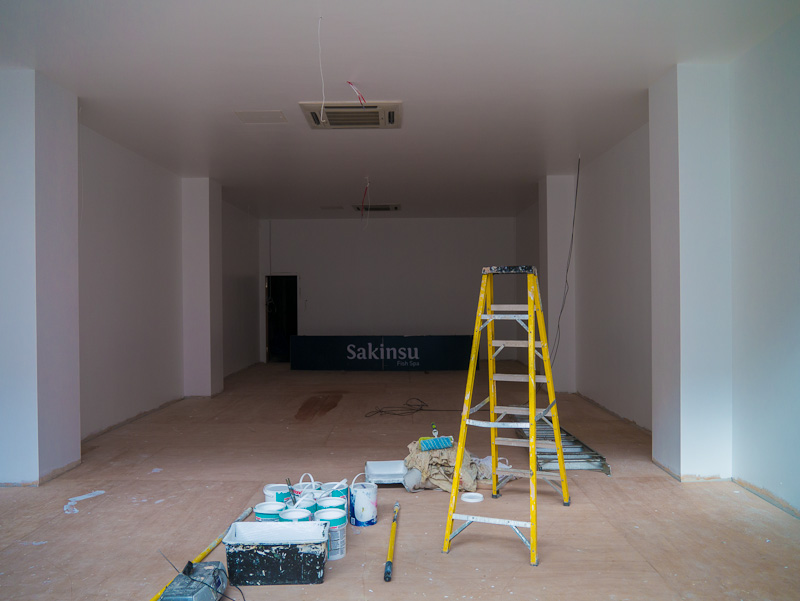
For this post I thought I'd show some of images I've taken for a long term project I'm working on.  The recession has hit British high streets very hard and it has not taken long for many shops, including those from major chains, to close.  These empty spaces are usually stripped bare and 'sanitised' so they can be put up for let.  As the recession has worsened I have noticed that newly emptied shops are being left in a worse condition.  It is almost as if the owners grabbed all they could and made a run for it.


Whenever I visit a town or city I'm always look for the tell-tale 'To Let' signs and making a beeline for the abandoned shops.  The spaces are usually left in darkness and the only light is from the street.  This makes capturing the images tricky as I need to use a long exposure and a steady hand.


I find the spaces eerie and they remind me of scenes from post-holocaust movies where disasters have swept through an area.  The bare walls and muted colours create a sense of loneliness and abandonment.  Some of the shops have been stripped right down with even the carpets removed but the majority are left with magnolia walls and dark blue carpets.  A scant few have traces that leave clues to their previous existence and the images shown here are amongst those.


So far I have managed to take pictures of over 80 empty shops in three locations, Shrewsbury, Wrexham and Liverpool.  There is definitely a pattern in where these spaces will be found.  In busy towns, like Shrewsbury, the main street there is little sign of the recession but if you step down any side street you can easily find empty shops.  In smaller towns or less affluent areas the closures are far more obvious.  I was shocked by how many empty shops I could photograph in the main shopping area of Wrexham, it felt like every other shop was closed.


Despite the implications of these empty spaces I think each of these images has a calm beauty about them.  They give an opportunity to see everyday spaces in a completely different way.  As a photographer I have found it very easy to take these pictures without being challenged by members of the public or security personnel.  If the shops had been occupied I have no doubt that I would have been moved along in a brisk manner and told to keep away.


I would like to think that we are near the very bottom of the second dip of this recession and that things can't get any worse.  I have returned to some of the shops to see what condition they are in and have seen signs that work is being done inside them for new tenants.

The final image I'm sharing with you may not look like much but perhaps there is hope that the British high street can be saved.  there is still life in these empty spaces and new shops will hopefully step up to take the places of those that fell.